
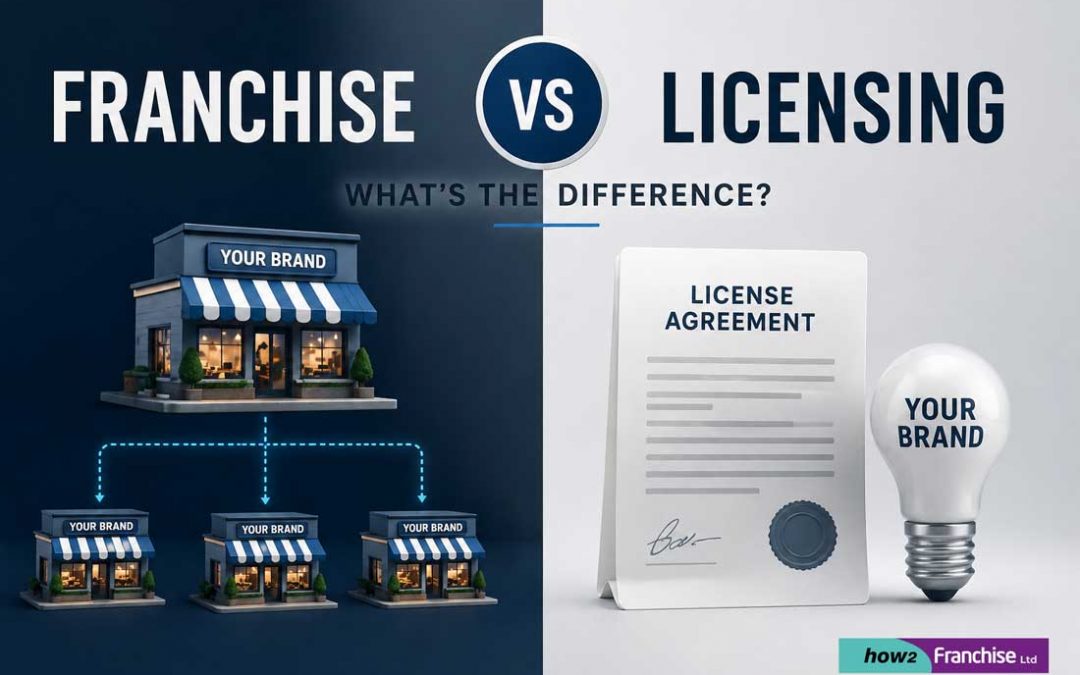
If you’re looking to grow your business, you’ve probably come across two common routes: franchising and licensing. On the surface, they can seem similar—but in reality, they offer very different levels of control, structure, and long-term growth potential.
A licence is the simpler of the two. It allows another party to use your brand, product, or intellectual property, usually in exchange for a fee or royalty. You’re essentially giving permission—but not taking responsibility for how the business is run. That means less involvement day-to-day, but also less control over quality, customer experience, and brand consistency.
A franchise, on the other hand, is a complete business model. You’re not just licensing a name—you’re providing a proven system, processes, branding, training, and ongoing support. Franchisees operate under your brand, but they follow your structure closely to maintain standards across every location.
This is where the key difference lies:
👉 Licensing = low control, low involvement
👉 Franchising = high control, structured growth
While licensing might seem like the easier option, it can dilute your brand if not managed carefully. Franchising takes more effort to set up, but it creates a scalable, consistent business that can grow across multiple locations while protecting your reputation.
If your goal is to build something long-term and recognisable, franchising is often the smarter route.
Want to explore how your business could grow as a franchise?
Visit 👉 https://how2franchiseltd.com/